
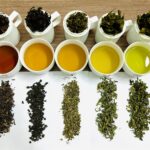
 SPECIAL TEA
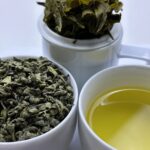 GREEN TEA
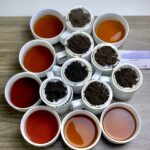 BLACK TEA CTC
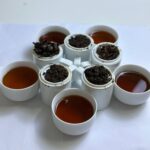 BLACK TEA ORTHODOX
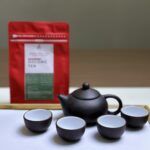 OOLONG LAO TRA
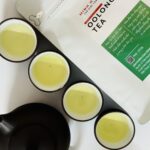 OOLONG THANH TRA
Part 2: Types of Tea Flavors
The five basic tastes we can perceive are salty, sour, sweet, bitter, and umami, along with the sensation of the whole palate. By combining this with the experience of analyzing aromas, we can create an evaluation chart to describe tea, determining the value and potential of the tea we are drinking or producing.
Flavor has become a top evaluation criterion for tea. Additionally, developing sensory perception of flavor allows us to find a common system of standards, and, from there, a “common language,” regardless of the differences in tea types, brewing methods, origin, or product appearance.
1. Sweet Taste: When we talk about sweetness, we think of the taste of sugar, but sweet stimulants include sugars, glycols, aldehydes, esters, some amino acids, and some small proteins.
- Sweetness can be intense, sharp, or mild, with sucrose used as the standard to measure sweetness (sweetness index).
- For example, fructose provides a sharp sweetness.
- Glucose gives a milder sweetness.
- Artificial sweeteners (like Aspartame) are sweet with a bitter aftertaste.
This can be used as a reference to detect the sweetness in tea if the manufacturer uses sugars as additives in tea production.
2. Bitter Taste: Bitterness, like sweetness, is not caused by a single substance. There are two groups of substances causing bitterness: one is alkaloids found in polyphenols, and the other consists of long-chain organic compounds containing nitrogen.
- Common foods and drinks with a bitter taste include tea, coffee, citrus peel, etc. Ethanol in alcoholic beverages also has a bitter taste, and quinine is well-known for its bitterness, found in tonic water.
- Quinine is used as the standard to measure bitterness. Caffeine (found in tea and coffee) has a bitterness level of 0.4 compared to quinine, meaning it is less bitter.
Typically, those who like the bitterness of coffee may not enjoy the bitterness of tea.
3. Sour Taste: Foods with a sour taste are often compared to lemon or vinegar. The acidity of substances is evaluated relative to dilute hydrochloric acid, which has an acidity index of 1.
- Carbonic acid, often used in beverages, has a mild sourness (0.06), while citric acid in lemon has a sharper sourness (0.46), and vinegar is very sharp (0.55).
- The intensity of sourness is proportional to the concentration of hydrogen ions; therefore, the more acidic the food or drink, the stronger the sour sensation.
Depending on the sourness, we can balance a cup of tea to have both sweetness and mild sourness through deeper fermentation, or create interesting dishes like tea salad or salted tea.
 |
 |
 |
4. Salty Taste: The salty taste is the basic flavor of seawater or common table salt (sodium chloride, NaCl). Saltiness is stimulated by ionized salts such as Na+, K+, and Li+.
- It has been researched that low concentrations of salt (<100 mM NaCl) stimulate taste buds, causing a craving for salt, but when the salt concentration is too high, it activates both bitter and sour taste receptors.
This can be used to adjust soil and fertilizers appropriately, or to use water sources for brewing tea with low ionized salt to minimize the perception of bitterness and sourness.
5. Umami Taste: Umami is a Japanese word meaning delicious, and umami is the taste of the amino acid L-glutamine, easily recognized in monosodium glutamate (MSG). Most people describe it as a pleasant taste, qualitatively different from the other four basic tastes.
For producers, increasing the content of the amino acid L-glutamine through root and foliar fertilizers, and covering tea plants for longer periods before harvest to avoid sunlight, are ways to enhance the L-glutamine content.